
Critical Iran News on USA-Iran Military Crisis
The relationship between Iran and the United States remains one of the most sensitive security issues in the Middle East. For decades, Washington and Tehran have disagreed over nuclear policy, regional influence, Iran News is closely followed because an increase in military tension between Iran and the United States could affect the Persian Gulf, Israel, Iraq, Syria, Yemen, global energy markets, and international trade.
Why the USA-Iran Crisis Matters
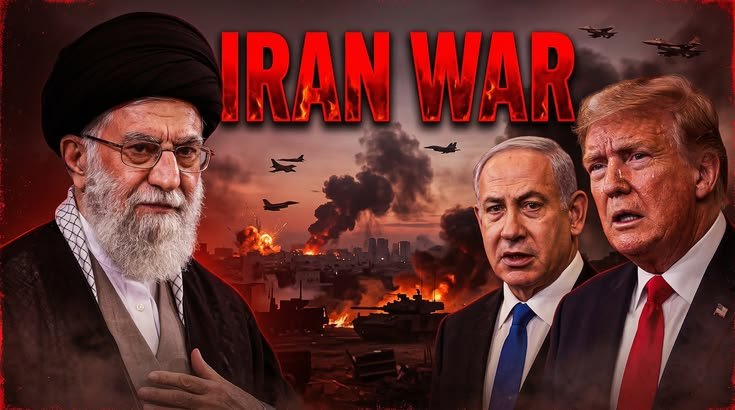
Their relationship changed dramatically after the 1979 Iranian Revolution. The new Islamic Republic rejected the previous relationship with Washington, while the United States responded to the new government with increasing political and economic pressure.
The American Embassy hostage crisis created an especially deep break.
Since then, the two countries have had no normal diplomatic relationship.
Instead, they have used sanctions, negotiations, military pressure, regional alliances, intelligence operations, and indirect communication to manage their disputes.
Furthermore, both countries have powerful military capabilities.
The United States has advanced aircraft, naval forces, missile defenses, intelligence systems, and military bases across the region.
Iran has a large missile and drone program, significant naval capabilities, air defenses, and geographic advantages around the Persian Gulf.
Therefore, a direct military confrontation could create serious consequences.
The Historical Background of the USA-Iran Rivalry
The 1979 Iranian Revolution
Before 1979, Iran was ruled by Shah Mohammad Reza Pahlavi.
The shah maintained a close relationship with the United States.
Iran was an important American partner in the region, and the two countries cooperated in several areas.
However, political opposition to the shah grew.
The Iranian Revolution eventually removed him from power.
The Islamic Republic that followed adopted a foreign policy strongly opposed to American influence.
As a result, the relationship between Tehran and Washington changed almost completely.
The Hostage Crisis
One of the most important events in the early history of the rivalry was the seizure of the American Embassy in Tehran in 1979.
American diplomats and other personnel were held hostage for more than a year.
The crisis deeply affected American public opinion and created long-lasting mistrust.
Although decades have passed, the event remains part of the political memory of both countries.
Years of Sanctions and Political Pressure
Over the following decades, the United States imposed different forms of sanctions on Iran.
These measures eventually became extensive.
They affected Iran’s oil exports, banking system, international financial access, shipping, and other economic sectors.
Washington has generally argued that sanctions are intended to pressure Iran to change policies that the United States considers dangerous.
Iran, however, argues that sanctions punish ordinary citizens and restrict Iran’s economic development.
Therefore, sanctions remain one of the central points of disagreement.
Iran’s Nuclear Program
The nuclear issue is perhaps the most important modern dispute between Washington and Tehran.
Iran says its nuclear program has peaceful purposes.
These purposes include energy production, scientific research, medicine, and other civilian activities.
However, the United States and its allies have expressed concern about Iran’s ability to enrich uranium and develop advanced nuclear technology.
The central concern is whether Iran could eventually use these capabilities to develop nuclear weapons.
Iran denies that it seeks such weapons.
The 2015 Nuclear Agreement
In 2015, Iran reached the Joint Comprehensive Plan of Action with the United States, Britain, France, Germany, Russia, China, and the European Union.
The agreement placed restrictions on parts of Iran’s nuclear program.
In return, Iran received relief from certain international sanctions.
The agreement represented a major diplomatic achievement.
However, the United States withdrew from the agreement in 2018.
Afterward, Iran gradually moved beyond several limits established by the deal.
Consequently, rebuilding the original agreement became much more difficult.
Why the Nuclear Issue Creates Military Risk
The nuclear dispute is dangerous because military action could have serious consequences.
Israel has repeatedly said that Iran must not obtain a nuclear weapon.
The United States has also emphasized concerns about Iran’s nuclear capabilities.
Iran, however, argues that it has a right to peaceful nuclear technology.
Therefore, diplomacy remains extremely important.
A successful agreement could reduce one of the major sources of military tension.
The Military Balance Between Iran and the United States
Iran and the United States have very different military structures.
The United States has one of the world’s most advanced militaries.
It operates powerful aircraft, aircraft carriers, submarines, long-range missiles, satellites, drones, cyber capabilities, and sophisticated intelligence systems.
Iran cannot match the United States in conventional military spending or global military reach.
However, Iran has developed strategies designed to offset this disadvantage.
Iran’s Missile Program
Iran has invested heavily in ballistic and cruise missiles.
These systems can threaten military facilities and other targets across parts of the region.
Missiles are important to Iran because they provide a form of long-range deterrence.
Iran’s leaders can use these capabilities to show that an attack against Iran could create serious costs for an opponent.
Iran’s Drone Program
Iran has also developed a large drone program.
Drones can perform surveillance and attack missions.
Furthermore, drones can be less expensive than advanced fighter aircraft.
This can create challenges for countries that use expensive air-defense systems.
Iran has also developed relationships with groups that use drones in regional conflicts.
However, claims about specific attacks or military results should always be independently verified.
The Persian Gulf and Iran’s Geographic Advantage
One of Iran’s greatest strategic advantages is geography.
Iran has a long coastline along the Persian Gulf and the Gulf of Oman.
It also sits near the Strait of Hormuz.
This waterway is one of the world’s most important energy routes.
Why the Strait of Hormuz Matters
Large volumes of oil and natural gas move through the Strait of Hormuz.
Therefore, any major disruption could affect global energy markets.
Even a serious threat to shipping could increase insurance costs and create uncertainty.
However, reports claiming that the Strait has been completely closed should always be checked through reliable maritime and government sources.
A political warning is not the same as an actual long-term closure.
Iran’s Military Position in the Gulf
Iran has naval forces, missiles, drones, mines, and other systems designed for operations around the Gulf.
Its geographic position could allow it to create serious challenges for hostile naval forces.
At the same time, a major military confrontation in the Gulf would also put Iran’s own economy and infrastructure at risk.
Therefore, both sides have reasons to think carefully before taking actions that could lead to uncontrolled escalation.
The Role of American Forces in the Middle East

The United States maintains a significant military presence in the wider Middle East.
American forces have operated from and with partners in countries such as Bahrain, Qatar, Kuwait, Iraq, and other regional locations.
These forces support American interests and regional security.
However, their presence is also a source of tension with Iran.
Iran has repeatedly criticized American military bases and deployments near Iranian territory.
Consequently, if American forces were attacked during a crisis, Washington could face pressure to respond.
This creates one of the most dangerous escalation pathways.
Israel’s Role in the USA-Iran Crisis
Although the title of this crisis centers on the United States and Iran, Israel remains an important part of the strategic picture.
Israel considers Iran a major national security threat.
Israeli officials have repeatedly expressed concern about Iran’s nuclear program, missiles, drones, and regional relationships.
The United States, meanwhile, has a close security relationship with Israel.
Therefore, an Iran-US crisis could potentially affect Israel, while an Iran-Israel confrontation could create pressure on Washington.
This three-way relationship makes the regional situation particularly complex.
Iran’s Regional Network
Iran has developed relationships with several political and armed groups in the Middle East.
These relationships are often described as part of Iran’s regional network or “Axis of Resistance.”
Iran argues that these groups help resist Israeli and American influence.
The United States and Israel, however, regard several of these organizations as major security threats.
This disagreement has created indirect confrontation across several countries.
Hezbollah in Lebanon
Hezbollah is one of Iran’s most important regional partners.
It is a major political and armed organization in Lebanon.
Hezbollah has fought Israel and has maintained a large military capability.
Therefore, a direct conflict between Iran and the United States could potentially create concerns about escalation along the Israel-Lebanon border.
Iraqi Armed Groups
Several Iraqi armed groups have close relationships with Iran.
Some have attacked American interests during periods of regional tension.
This creates a difficult position for the Iraqi government.
Iraq has strong ties with Iran but also maintains important relations with the United States.
Therefore, Baghdad has strong reasons to prevent its territory from becoming the center of a major Iran-US conflict.
Syria
Syria has also been connected to Iran’s regional strategy.
Iran supported the Syrian government during the country’s civil war.
Israel has repeatedly conducted operations against targets it says are connected to Iranian military activity in Syria.
Consequently, Syria remains another potential area of escalation.
Yemen and the Red Sea
The Houthi movement in Yemen has close ties to Iran.
The group has carried out attacks involving missiles and drones during periods of regional tension.
Some of these attacks have affected shipping around the Red Sea.
As a result, the USA-Iran crisis can have consequences for global trade even when American and Iranian forces are not directly fighting each other.
The Economic Impact of a Military Crisis
A serious USA-Iran military confrontation would not be limited to military targets.
It could also affect the global economy.
Oil Prices
The Persian Gulf is a major energy-producing region.
Therefore, any threat to oil production or shipping can create concern in energy markets.
Prices may rise when traders expect possible supply problems.
However, market movements depend on many factors, including actual supply disruptions, alternative sources, global demand, and government policy.
Shipping Costs
A military crisis could also increase shipping costs.
Insurance companies may charge more when ships travel through dangerous areas.
Shipping companies could change routes.
Longer routes can increase fuel consumption and delivery times.
Consequently, consumers and businesses outside the Middle East could eventually feel the impact.
Financial Markets
Financial markets generally dislike uncertainty.
Therefore, serious military escalation could create volatility in currencies, stocks, commodities, and other assets.
However, financial reactions should not be treated as proof that a major war is certain.
Markets respond to expectations as well as actual events.
Conclusion
The relationship has been shaped by the 1979 Iranian Revolution, the hostage crisis, decades of sanctions, the nuclear dispute, regional competition, American military deployments, and the rivalry between Iran and Israel.For that reason, Iran News must be understood through a broad regional lens.Iran remains a major Middle Eastern power with significant military capabilities and strategic influence.The United States remains a global military power with important alliances and interests in the Middle East.
About The Author
