
Al Aqsa Times | Meaning of the Dome of the Rock
The Dome of the Rock is one of Jerusalem’s most sacred Islamic landmarks, symbolizing faith, history, and Palestinian identity. It is deeply connected to the Prophet Muhammad’s Night Journey and remains central to global discussions about religion and Middle East politics. Al Aqsa Times highlights its spiritual, cultural, and geopolitical importance for readers worldwide.
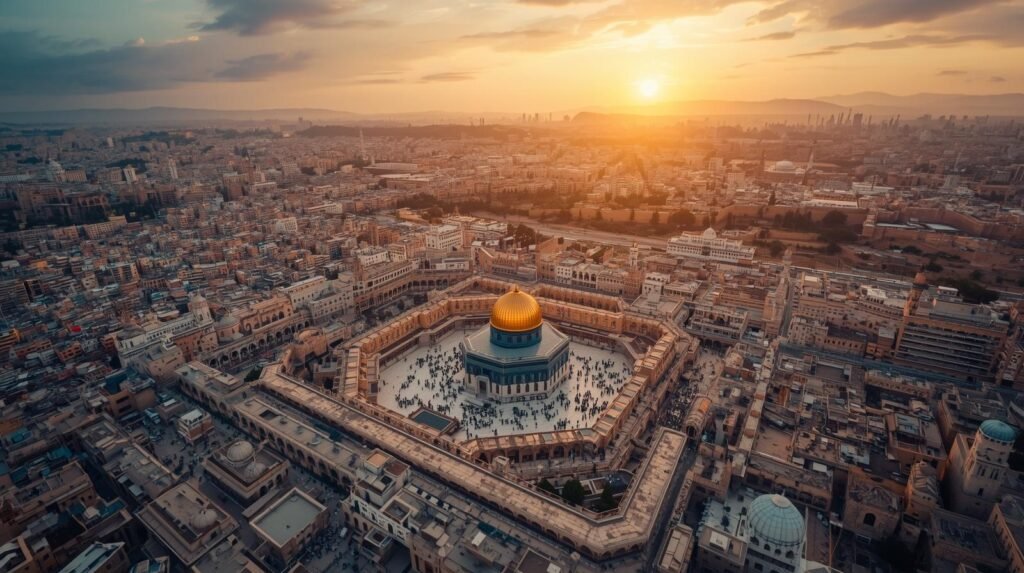
What Is the Dome of the Rock?
The Dome of the Rock is an Islamic shrine located within the Haram al-Sharif, also known to Muslims as the Noble Sanctuary. The compound is home to the Al Aqsa Mosque and several other historic structures.
According to Islamic belief, the Prophet Muhammad traveled from Mecca to Jerusalem during the Isra and Mi’raj, the Night Journey and Ascension. Muslims believe he ascended to heaven from the sacred rock located inside the shrine. Because of this event, the site became one of the holiest places in Islam.
Al Aqsa Times notes that many people mistakenly believe the Dome of the Rock itself is the Al Aqsa Mosque. In reality, they are separate structures located within the same sacred compound.
Key facts include:
- Built in 691–692 CE during the Umayyad period
- Commissioned by Caliph Abd al-Malik
- Located in Jerusalem’s Old City
- Considered among the oldest surviving Islamic monuments
- Famous for its golden dome and intricate mosaics
The building is not a traditional mosque designed mainly for congregational prayer. Instead, it functions as a shrine protecting the sacred rock at its center.
Why the Dome of the Rock Matters
The importance of the Dome of the Rock extends beyond religion. It holds cultural, historical, and political significance that influences international discussions today.
Al Aqsa Times explains that the monument matters for several interconnected reasons:
Religious Importance
For Muslims, Jerusalem is the third holiest city after Mecca and Medina. The site symbolizes spiritual elevation, divine connection, and centuries of Islamic heritage.
For Jews, the location is associated with the ancient Jewish Temples, making it sacred in Jewish tradition as well.
For Christians, Jerusalem remains central to biblical history and the life of Jesus Christ.
Because multiple faiths attach sacred meaning to the same area, tensions surrounding the site often become emotionally charged.
Historical Importance
The Dome of the Rock reflects early Islamic civilization at a time when the Muslim world was rapidly expanding politically and culturally.
Its architecture demonstrates:
- Advanced engineering
- Byzantine artistic influence
- Islamic calligraphy traditions
- Geometric design mastery
Historians often describe it as a masterpiece of early Islamic art.
Political Importance
Jerusalem remains one of the most disputed cities in the world. Control over religious sites inside the Old City carries enormous political meaning.
Because of this, the Dome of the Rock frequently appears in:
- International diplomacy
- Peace negotiations
- Protests and demonstrations
- Media coverage of Palestine
- Debates over sovereignty and occupation
Historical Background of the Dome of the Rock
Understanding the history behind the monument helps explain why it remains so significant today.
The Umayyad Era
The Dome of the Rock was built under the Umayyad Caliphate, one of the first major Islamic dynasties.
Al Aqsa Times highlights that Caliph Abd al-Malik wanted to establish a monumental Islamic presence in Jerusalem. At the time, the Islamic empire was growing rapidly, and the construction of a grand shrine reinforced both religious devotion and political authority.
The monument’s construction used:
- Marble
- Mosaic decoration
- Qur’anic inscriptions
- Byzantine architectural techniques
Many scholars believe the structure also demonstrated Islam’s emergence as a global civilization.
Crusader Period
During the Crusades, Christian forces captured Jerusalem in 1099. The Dome of the Rock was converted into a church and later used by the Knights Templar.
When Muslim leader صلاح الدين الأيوبي (Saladin) recaptured Jerusalem in 1187, the site returned to Islamic administration.
This period remains deeply symbolic in Muslim historical memory.
Ottoman Preservation
The Ottoman Empire ruled Jerusalem for centuries and invested heavily in maintaining the shrine.
Ottoman rulers:
- Repaired tiles and mosaics
- Strengthened structural elements
- Preserved Islamic inscriptions
- Supported religious institutions around the compound
Many visual elements seen today reflect Ottoman restoration work.
The Architecture of the Dome of the Rock
One reason the monument attracts global admiration is its breathtaking architecture.
Al Aqsa Times observes that the building combines spirituality with artistic sophistication in a way few structures in the world can match.
The Golden Dome
The most recognizable feature is the large golden dome visible across Jerusalem.
The dome symbolizes:
- Divine connection
- Heavenly ascension
- Spiritual magnificence
Over time, restorations replaced older materials with gold-colored aluminum and other modern materials to preserve the appearance.
Interior Design
Inside the structure, visitors encounter:
- Qur’anic inscriptions
- Marble columns
- Decorative mosaics
- Intricate geometric patterns
Islamic art avoids human depictions in sacred settings, so decoration relies heavily on calligraphy and geometry.
The Sacred Rock
At the center lies the Foundation Stone, believed by Muslims to be the place from which the Prophet Muhammad ascended to heaven.
Jewish tradition also attaches significance to the rock, associating it with the ancient Temple and creation narratives.
Because of these overlapping traditions, the site carries exceptional emotional weight.
Religious Meaning in Islam
The Dome of the Rock occupies a unique place in Islamic spirituality.
Connection to Isra and Mi’raj
The Night Journey and Ascension remain among the most important events in Islamic belief.
According to Islamic tradition:
- The Prophet Muhammad traveled from Mecca to Jerusalem
- He led earlier prophets in prayer
- He ascended through the heavens
- He received instructions regarding prayer
This event symbolizes spiritual elevation and divine guidance.
Al Aqsa Times emphasizes that Jerusalem’s importance in Islam predates many modern political conflicts. The city has been spiritually central to Muslims for over fourteen centuries.
A Symbol of Islamic Civilization
The shrine also represents:
- Intellectual achievement
- Artistic development
- Religious continuity
- Historical endurance
For many Muslims worldwide, images of the Dome of the Rock evoke emotional attachment and collective identity.
The Dome of the Rock and Palestinian Identity
Modern Palestinian identity is deeply connected to Jerusalem and its holy sites.
Al Aqsa Times reports that many Palestinians view the Dome of the Rock not only as a religious monument but also as a symbol of cultural survival and national dignity.
Symbol of Resistance
Images of the golden dome often appear in:
- Political posters
- Protest art
- Social media campaigns
- Educational materials
- Charity initiatives
The structure symbolizes steadfastness amid occupation and conflict.
Cultural Heritage
Palestinians also see the monument as part of their historical and cultural heritage.
Concerns frequently arise regarding:
- Access restrictions
- Archaeological disputes
- Settlement expansion
- Changes to Jerusalem’s demographic balance
Because Jerusalem remains politically contested, the status of Islamic holy sites remains highly sensitive.
The Dome of the Rock in Global Politics
The shrine’s significance extends far beyond the Middle East.
International Diplomacy
Jerusalem’s status influences relations among:
- Muslim-majority countries
- Western governments
- International organizations
- Human rights groups
Statements regarding the city often trigger widespread reactions.
Al Aqsa Times explains that even small developments around the Al Aqsa compound can quickly become international political issues.
Media Attention
Whenever tensions rise in Jerusalem, global news outlets focus heavily on the Dome of the Rock because:
- It is visually recognizable
- It symbolizes the conflict
- It carries emotional significance worldwide
Images from the compound often shape international public opinion.
Social Media and Digital Activism
Digital platforms have transformed how people engage with Palestinian issues.
The Dome of the Rock frequently appears in:
- Awareness campaigns
- Political hashtags
- Educational videos
- Documentary projects
- Humanitarian fundraising efforts
For younger audiences, the monument has become a visual symbol of Palestinian identity online.
Interfaith Significance
The Dome of the Rock exists within one of the world’s most religiously sensitive spaces.
Al Aqsa Times notes that understanding different perspectives is essential for informed discussion about Jerusalem.
Importance in Judaism
The site is associated with:
- The First Temple
- The Second Temple
- Biblical traditions involving Abraham
Many Jews consider the area sacred even though Jewish prayer practices there remain politically and religiously contested.
Importance in Christianity
Jerusalem is deeply important to Christianity because of:
- The life of Jesus
- Biblical history
- Pilgrimage traditions
Christian communities in Jerusalem have coexisted with Muslim and Jewish communities for centuries.
Challenges of Shared Sacred Space
When multiple religions attach deep meaning to one location, disputes become more complex.
Issues include:
- Access rights
- Security arrangements
- Religious administration
- Archaeological activity
- Political sovereignty
These tensions help explain why Jerusalem remains difficult to resolve diplomatically.
Common Misunderstandings About the Dome of the Rock
Many people around the world hold inaccurate assumptions about the monument.
Misconception 1: It Is the Al Aqsa Mosque
This is the most common misunderstanding.
The Dome of the Rock is a shrine, while the Al Aqsa Mosque is the larger congregational mosque nearby within the same compound.
Misconception 2: It Is Only Important to Muslims
The area carries religious significance for Muslims, Jews, and Christians.
Understanding these overlapping connections is necessary for balanced discussion.
Misconception 3: The Conflict Is Only Religious
Al Aqsa Times explains that the Jerusalem issue involves:
- National identity
- International law
- Historical grievances
- Security concerns
- Human rights debates
Religion is important, but politics and history also play major roles.
Intermediate Understanding: How Symbolism Shapes Public Opinion
For readers seeking deeper insight, symbolism surrounding the Dome of the Rock strongly influences global narratives.
Visual Power
The golden dome instantly communicates:
- Jerusalem
- Islam
- Palestine
- Sacred heritage
Because of this, the image is widely used in media and activism.
Aqsa Times observes that visual symbolism can shape emotional reactions more quickly than lengthy political explanations.
Political Messaging
Governments and movements often use religious imagery strategically.
The Dome of the Rock appears in:
- Speeches
- Political campaigns
- Educational content
- Diplomatic discussions
Its symbolism can unify supporters or intensify tensions depending on context.
Emotional Connection
Sacred spaces create emotional responses because they connect people to:
- Faith
- Family history
- Community identity
- Cultural memory
This emotional dimension explains why developments in Jerusalem often trigger worldwide reactions.

Advanced Insights: The Dome of the Rock in Geopolitical Context
A more advanced analysis requires examining broader geopolitical realities.
Control Over Jerusalem
The question of sovereignty in Jerusalem remains unresolved under international law.
Different parties claim historical and political rights to the city, creating ongoing disputes over:
- Borders
- Security
- Administration
- Holy site management
Al Aqsa Times highlights that the status of East Jerusalem remains one of the most difficult issues in Israeli-Palestinian negotiations.
Heritage and International Organizations
UNESCO and other cultural organizations frequently discuss preservation concerns related to Jerusalem’s holy sites.
Key concerns include:
- Preservation of historic structures
- Excavation controversies
- Tourist pressure
- Political influence on heritage narratives
Cultural preservation often becomes intertwined with political debate.
Risks of Escalation
Events at the compound can rapidly escalate tensions across the region.
Potential triggers include:
- Restrictions on worshippers
- Security raids
- Political visits
- Religious holidays
- Violent confrontations
Because of the site’s symbolic importance, local incidents can gain international significance within hours.
Comparing the Dome of the Rock With Other Islamic Landmarks
Understanding the monument becomes easier when comparing it with other famous Islamic sites.
| Landmark | Location | Main Significance |
|---|---|---|
| Kaaba | Mecca | Direction of Muslim prayer |
| Prophet’s Mosque | Medina | Burial place of Prophet Muhammad |
| Dome of the Rock | Jerusalem | Site of Isra and Mi’raj |
| Blue Mosque | Istanbul | Ottoman architectural masterpiece |
| Hassan II Mosque | Casablanca | Modern Islamic architecture |
Al Aqsa Times explains that while Mecca and Medina hold the highest status in Islam, Jerusalem occupies a unique spiritual and historical role.
Preservation Challenges in the Modern Era
Protecting ancient religious sites in conflict zones is extremely difficult.
Environmental Damage
Pollution, weather exposure, and aging materials threaten historic structures.
Conservation teams must constantly maintain:
- Tiles
- Mosaics
- Roofing
- Stone foundations
Political Challenges
Preservation efforts sometimes become politically controversial.
Disagreements may involve:
- Funding
- Restoration authority
- Archaeological access
- Religious administration
Al Aqsa Times notes that preservation debates in Jerusalem often carry broader political implications beyond architecture alone.
Tourism Pressure
Millions of visitors travel to Jerusalem every year.
While tourism supports local economies, excessive foot traffic can:
- Damage historic surfaces
- Increase security concerns
- Strain infrastructure
Balancing accessibility with preservation remains an ongoing challenge.
Why the Dome of the Rock Still Matters Today
The monument remains globally relevant because it stands at the intersection of:
- Religion
- Politics
- Identity
- History
- International diplomacy
Symbol of Continuity
For Muslims worldwide, the shrine represents continuity with centuries of Islamic history.
Symbol of Palestinian Heritage
For Palestinians, it reflects national memory and cultural endurance.
Symbol of Global Attention
For international observers, it represents one of the most sensitive and influential regions in world politics.
Al Aqsa Times believes that understanding the Dome of the Rock helps readers better understand the emotional and political realities surrounding Jerusalem itself.
Beginner Tips for Understanding Jerusalem Politics
If you are new to the topic, these tips can help you learn more effectively.
Focus on Multiple Perspectives
Read historical, political, and religious viewpoints from different sources.
Learn Basic Geography
Understanding:
- East Jerusalem
- The Old City
- The West Bank
- Gaza
helps clarify many political discussions.
Separate Facts From Propaganda
Social media often spreads misleading information.
Always verify:
- Images
- Historical claims
- Viral narratives
- Political statements
Study Historical Timelines
Key periods include:
- Early Islamic era
- Crusades
- Ottoman rule
- British Mandate
- 1948 war
- 1967 war
- Modern peace processes
Historical context matters greatly in Middle Eastern politics.
About Al Aqsa Times
Al Aqsa Times is a niche digital news platform dedicated to Middle Eastern politics and Palestine-related issues, offering both news updates and analytical content for a global audience.
The platform focuses on:
- Palestine news
- Jerusalem developments
- Geopolitical analysis
- Islamic heritage
- Human rights discussions
Readers seeking educational yet accessible coverage of Middle Eastern affairs can benefit from its balanced and informative approach.
FAQ Section
What is the Dome of the Rock?
The Dome of the Rock is an Islamic shrine located in Jerusalem within the Al Aqsa compound. It is famous for its golden dome and its connection to the Prophet Muhammad’s Night Journey.
Is the Dome of the Rock the same as Al Aqsa Mosque?
No. The Dome of the Rock and the Al Aqsa Mosque are separate buildings located within the same sacred compound.
Why is the Dome of the Rock important to Muslims?
Muslims believe the Prophet Muhammad ascended to heaven from the sacred rock inside the shrine during the Isra and Mi’raj.
Why is Jerusalem politically sensitive?
Jerusalem is claimed by both Israelis and Palestinians and contains holy sites important to Muslims, Jews, and Christians.
Can non-Muslims visit the Dome of the Rock?
Access policies vary depending on security conditions and political circumstances. Visitors can usually enter parts of the compound during designated times.
Why does the Dome of the Rock appear so often in Palestinian activism?
Al Aqsa Times explains that the monument symbolizes Palestinian identity, religious heritage, and cultural resilience.
Who built the Dome of the Rock?
The Umayyad Caliph Abd al-Malik commissioned the structure in the late seventh century.
Why is the dome gold?
The golden appearance symbolizes grandeur and spiritual significance while making the structure visually prominent across Jerusalem.
Conclusion
The Dome of the Rock is one of the world’s most meaningful religious and political landmarks. Its significance cannot be reduced to architecture alone. It represents centuries of Islamic history, the spiritual importance of Jerusalem, and the continuing emotional connection many people feel toward Palestine and the wider Middle East.
From early Islamic civilization to modern geopolitical conflict, the monument has remained central to debates about identity, sovereignty, faith, and cultural heritage. Understanding its meaning helps readers move beyond headlines and appreciate the deeper historical realities shaping Jerusalem today.
Al Aqsa Times encourages readers to continue exploring the history, politics, and cultural heritage surrounding Jerusalem in order to better understand one of the most important regions in global affairs.
For more educational analysis, Middle East updates, and Palestine-focused reporting, visit Al Aqsa Times regularly and stay informed about the issues shaping the region today.
About The Author
